
Here's the straight answer: hair replacement and hair transplants are two completely different approaches to dealing with hair loss. One is non-surgical and uses custom hair systems. The other is a surgical procedure that moves your own hair follicles around your scalp. Which one is right for you depends on your budget, how much maintenance you're willing to do, and how quickly you want to see results.
What's the Actual Difference Between Hair Replacement and Hair Transplant?
Let's start with the basics so you're not confused when you're researching options.
Related: Hair Replacement Maintenance and Care: Daily Tips
Related: Can You Exercise With a Hair Replacement System?
Related: Hair Restoration in Livingston, NJ: Non-Surgical Options Explained
Related: Affordable Hair Replacement Solutions NJ | Livingston Salon
Related: Hair Replacement Attachment Options Explained
Related: Hair Replacement for Hair Loss: Non-Surgical Options Explained
Related: Non-Surgical Hair Replacement for Women vs. Men in 2026
Related: Best Non-Surgical Hair Replacement Options in New Jersey 2026
Related: Hair Replacement for Men in Livingston, NJ | Non-Surgical Options
Related: Types of Hair Replacement Attachment Methods Explained
Related: Non-Surgical Hair Replacement for Alopecia: What Works
Hair replacement (also called non-surgical hair replacement) uses a custom-made hair system that attaches to your scalp. Think of it like a really advanced hairpiece that's tailored specifically to your head. These systems use high-quality synthetic or human hair fibers that are bonded or clipped to your existing hair or directly to your scalp. They sit on top of your head and blend in with your natural hair.
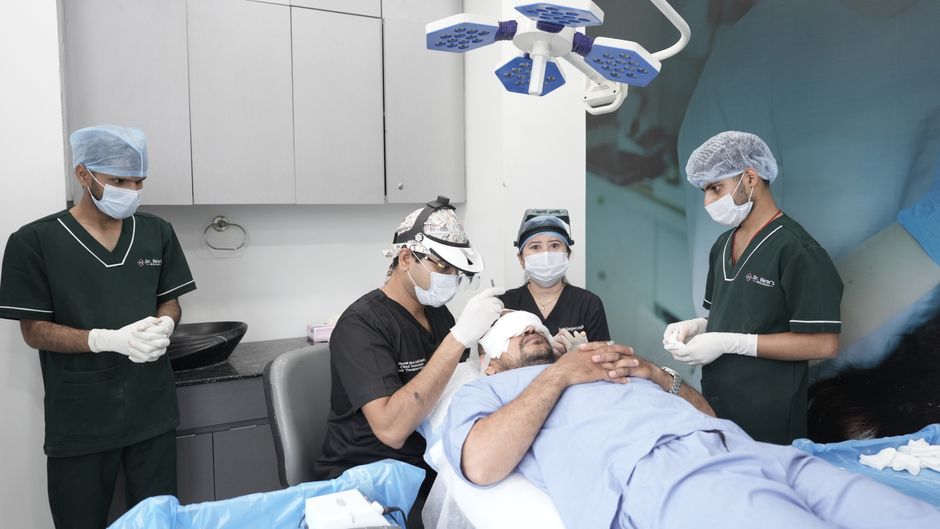
Hair transplants (also called hair restoration surgery) are surgical procedures where a surgeon takes healthy hair follicles from one part of your scalp (usually the back of your head where hair is thicker) and surgically implants them into areas where you're experiencing thinning or baldness. It's literally moving your own hair from Point A to Point B on your head.
So here's the key difference: one is something you wear, and the other is something a surgeon does to your scalp.
Timeline: When Will You See Results?
This is huge if you need hair back soon.
With non-surgical hair replacement, you can see results almost immediately. After your consultation and custom system is created and fitted, you walk out with a full head of hair. We're talking days to a few weeks, depending on how custom your system needs to be.
Hair transplants take way longer. After surgery, you're looking at a long wait. Hair doesn't grow overnight, and transplanted follicles need time to settle in and start producing new growth. Most people need 12 months or longer to see the full results of their transplant. Some results keep improving even after that.
If you're impatient or you need your hair back soon (like for a wedding or a job interview in a few months), hair replacement is your faster option.
Maintenance: What's Actually Involved?
Both options need care, but in different ways.
Hair replacement systems require regular maintenance. You'll need to come in for adjustments as your hair grows and your scalp changes. The system itself will eventually need to be replaced because the hair fibers naturally wear over time. Think of it like getting your car serviced. It's not a one-time thing. You're committing to ongoing appointments and upkeep.
Hair transplants are more permanent, which sounds great, but they still need care. You have to be gentle with your scalp in the weeks after surgery while it heals. Once healed, your transplanted hair should grow just like your normal hair, so you can wash it, style it, and live your life. The ongoing maintenance is basically just treating it like regular hair.
Which is easier for your lifestyle?
Cost Breakdown: What Are You Really Spending?

Money matters, so let's be real about it.
Hair transplant surgery has a high upfront cost because it's surgery. You're paying for a surgeon, an operating room, anesthesia, and follow-up care. The total can add up to thousands of dollars. But here's the thing: once it's done and healed, your costs mostly stop. You're not paying for replacement hair systems or regular adjustments.
Related: How Long Do Hair Replacement Systems Last? Real Timeline
Hair replacement systems often feel cheaper at first because the upfront cost is lower than surgery. But over time, maintenance, adjustments, and eventual replacement of the system itself can add up. If you keep a hair replacement system for many years, your total cost might actually end up being higher than a surgical transplant.
Your decision might come down to whether you have the money upfront or whether you prefer spreading the cost over time.
How Long Do Results Last?
Permanence is a big deal when you're choosing between these options.
Hair transplants, once fully grown in, are pretty permanent. Your transplanted hair should continue growing for the rest of your life because it comes from hair follicles that are genetically resistant to hair loss (usually from the back of your scalp). So if the transplant is successful, you're looking at a long-term solution.
Hair replacement systems are temporary by nature. You'll need to replace the system eventually. Hair fibers wear out, become damaged, or start to look less natural over time. Some systems last a year or two before needing replacement. Others can last longer, depending on how well you care for them and the quality of the hair system you choose.
If permanence is important to you, a hair transplant might be the better choice. But if you like the flexibility to change your hair or try different styles, a replacement system gives you that freedom.
Which Option Fits Your Life Right Now?
Here are the real questions you need to ask yourself:
Related: Non-Surgical Hair Replacement vs. Hair Transplants: Which Is Right for You?
Related: Hair Replacement Color Matching Process: How to Get It Right
Related: Hair Replacement Systems vs Wigs: Which is Right for You?
- Do you need hair back right away or can you wait a year?
- Are you comfortable with ongoing maintenance appointments?
- Do you have the budget for surgery upfront, or would you prefer smaller payments over time?
- Are you okay with permanent changes to your scalp, or do you prefer a reversible solution?
- How important is it that your hair feels and grows like natural hair?
Hair replacement is perfect if you want immediate results, you're not ready for surgery, or you like having options. Hair transplants are better if you want permanence, you can wait for results, and you want minimal ongoing maintenance.
The truth is, there's no universal "right" answer. It completely depends on your situation, your timeline, and what matters most to you. If you're in the Livingston, NJ area or nearby Essex County towns like Fairfield, Madison, Roseland, Short Hills, or West Orange, a consultation with trained professionals who understand both approaches can help you figure out what's best for your specific case.
Related: Hair Replacement Near Short Hills NJ: Your Local Guide
Ready to Explore Your Options?

If you're leaning toward non-surgical hair replacement and you want to see what's possible for your hair loss, Non-Surgical Hair Replacement in Livingston offers personalized consultations. You'll get a realistic picture of what results you can expect based on your unique hair and scalp. No pressure, just professional guidance to help you make the best choice.
Related: Hair Replacement Consultation in Livingston, NJ: What to Expect
Related: What to Expect at a Hair Replacement Consultation
Related: Non-Surgical Hair Replacement Cost: What You'll Actually Pay in 2026
Related: Non-Surgical Hair Replacement in Livingston NJ: What to Know
People Also Ask
Is hair replacement the same as a hair transplant?
No. Hair replacement is a non-surgical system that sits on your scalp. A hair transplant is surgery where a surgeon moves hair follicles from one area of your scalp to another. They're completely different procedures with different timelines, costs, and maintenance needs.
Related: How Non-Surgical Hair Replacement Works: Complete Process
Related: Hair Replacement for Women with Thinning Hair: Your Complete Guide
Related: Hair Replacement for Women in Livingston, NJ: Your Complete Guide
Related: Hair Replacement Systems for Men Over 40: A Complete Guide
Related: How to Maintain a Hair Replacement System: Complete Care Guide
Can you undo a hair transplant?
Once hair follicles are surgically transplanted, they're permanent. You can't easily reverse the procedure. That's why it's important to make sure you're ready for that commitment before you have surgery. Hair replacement systems, on the other hand, are reversible. You can stop wearing them anytime.
How often do you need to replace a hair replacement system?
It depends on the quality of the system and how well you care for it. Some systems need replacement within a year or two, while others last longer. Your hair care routine, how often you wear the system, and the specific materials used all affect how long it lasts. Regular maintenance appointments help extend the life of your system.
Which option is better for sensitive scalps?
Hair replacement systems can sometimes cause irritation if the attachment method doesn't work well for your scalp. Hair transplants involve surgery, which comes with its own healing process and potential sensitivity during recovery. If you have a sensitive scalp, discuss this with a professional before choosing either option. They can recommend attachment methods or surgical techniques that minimize irritation for your skin type.