

If you're losing hair and wondering whether to go the surgical or non-surgical route, you're asking the right question. The choice between non-surgical hair replacement and hair transplants comes down to your specific situation, how much downtime you can handle, and what kind of results you want right away.
Here's the short answer: non-surgical hair replacement gives you immediate results with zero recovery time, while hair transplants involve surgery, a healing period, and a wait to see how many grafts actually grow. Both can work. The best option depends on your hair loss extent, your lifestyle, and whether you want to maintain a system or commit to a surgical procedure.
Let's break down both so you can make an informed decision.
What Non-Surgical Hair Replacement Actually Is
Non-surgical hair replacement means wearing a custom hair system that's designed to blend seamlessly with your existing hair. It's not a wig in the old-school sense. These systems are precision-engineered to match your hair color, texture, and density.
Related: Non-Surgical Hair Replacement for Women vs. Men in 2026
Related: Non-Surgical Hair Replacement Alternatives: When to Consider Other Solutions
The system attaches to your scalp using medical-grade adhesives or clips, depending on which method works best for you. You can style it, wash it, and live your life just like it's your real hair. When you want it off, you take it off.
One huge advantage: you see results instantly. On day one of wearing a system, you have full hair coverage. There's no waiting months for anything to grow in. If you have a big event next week and you're dealing with hair loss now, a non-surgical system can be ready for you.
What Hair Transplants Involve
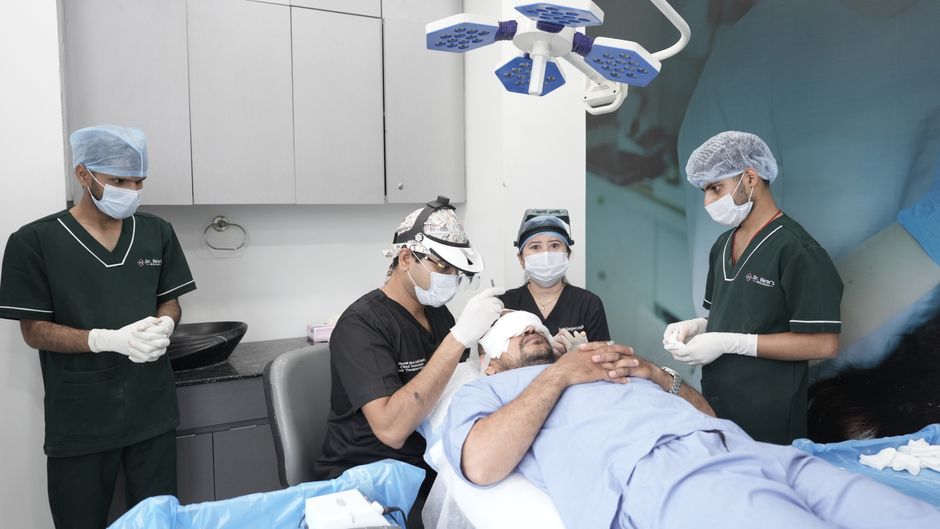
Hair transplants are a surgical procedure. A surgeon removes hair follicles from the back of your scalp (or sometimes your body) and grafts them into the areas where you're losing hair.
The procedure takes hours. Recovery takes weeks. You'll experience swelling, scabbing, and tenderness as your scalp heals. Most people need to take time off work or social activities during this window.
Then comes the waiting game. Transplanted hair doesn't grow right away. It takes months to see real growth, and the final results can take a year or longer to fully appear. Not every graft survives the transplant process, either, so the actual outcome depends on your individual healing and how well the procedure went.
Immediate Results vs. Long-Term Growth
This is where the two approaches differ most obviously. With non-surgical hair replacement, you walk out with a full head of hair. The results are there today, tomorrow, and whenever you're wearing the system.
Hair transplants promise long-term results, but only after your body does its thing. If you need coverage now, this option won't help you in the short term. You're committing to months of waiting and hoping the grafts take.
That said, if a hair transplant works well for you, it becomes a permanent part of your scalp. You're not maintaining a system. You're not replacing anything. It's just there.
Maintenance and Lifestyle Compatibility
Non-surgical hair replacement requires ongoing care. You'll need to maintain the system, refresh adhesives or clips, and care for the hair itself. Depending on your lifestyle and how active you are, this might be a weekly or bi-weekly commitment.
If you swim regularly, play contact sports, or live a very high-intensity lifestyle, you need to think about how a system fits into that. Some systems are more durable than others, and some attachment methods work better for active people.
Hair transplants, once healed, don't require special maintenance. You wash and style your new hair like any other hair. If the transplant is successful, this is actually less work long-term.
Cost and Financial Commitment
Both options involve investment. Hair transplant surgery is typically a larger upfront cost, but it's a one-time procedure. Non-surgical systems have an initial cost for the system itself, plus ongoing costs for maintenance, replacements, adhesives, and care products over time.
Related: Hair Replacement for Hair Loss: Non-Surgical Options Explained
The financial picture depends on how long you plan to use the system and how often you need to replace it. Some people use systems for years; others prefer to explore surgical options to avoid the maintenance cycle. Your budget and comfort with recurring costs matter here.
Surgical Risks vs. Non-Surgical Peace of Mind
Hair transplant surgery is a medical procedure, which means it carries risks like infection, scarring, and bleeding. Most people heal without serious complications, but those risks exist. You're also trusting that the surgeon has the skill to make your hair look natural and place grafts in the right spots.
Non-surgical systems have minimal health risks. You're not undergoing anesthesia or having incisions made. The main concern is keeping your scalp clean and healthy under the system, which is manageable with proper care.
Related: Hair Replacement Systems vs Wigs: Which is Right for You?
Related: Hair Replacement Color Matching Process: How to Get It Right
Related: Hair Replacement vs Hair Transplant: Which is Right for You?
How Much Hair Loss Do You Have?

Your current hair loss extent matters. If you're in the early stages of thinning, a hair transplant might be feasible because you still have donor hair available. But if you're significantly bald or balding, you might not have enough donor hair for a transplant to give you the coverage you want.
Non-surgical systems work regardless of how much hair you've lost. Even if you're completely bald, a system can give you full coverage. This makes non-surgical replacement a solid option for people with extensive hair loss.
Related: How Non-Surgical Hair Replacement Works: Complete Process
Control Over Your Appearance
With a non-surgical system, you have total control. Want to try a different style or color? You can change your system. Want to go back to your natural look one day? Take the system off. This flexibility is powerful if you like experimenting or if you want options for different occasions.
Hair transplants are permanent. Once the hair grows in, that's your look. You can style it different ways, but the density, coverage, and location are fixed. This is great if you know exactly what you want and you're confident in the result.
Making Your Decision
Ask yourself these questions:
- Do you need hair coverage immediately, or can you wait months for results?
- How comfortable are you with maintaining a hair system long-term?
- Do you have enough donor hair for a transplant to work well?
- Are you okay with surgical recovery, or would you prefer to avoid surgery altogether?
- Do you want the flexibility to change your look, or do you want a permanent solution?
- What's your budget for upfront costs versus ongoing maintenance?
If you're leaning toward non-surgical options and you want professional guidance tailored to your situation, Non-Surgical Hair Replacement in Livingston, NJ can walk you through what a custom system would look like for you. They serve clients throughout Essex County, including Fairfield, Madison, Roseland, Short Hills, and West Orange.
Related: Custom Hair Replacement Near Roseland, NJ | Non-Surgical Options
Next Steps
The best way to know which option is right for you is to have a real conversation with someone who understands both sides. If you're curious about non-surgical replacement, book a consultation to see what's possible. If you're exploring hair transplants, talk to a surgical specialist about your candidacy and realistic outcomes.
You don't have to make this decision alone. A consultation with trained professionals who can assess your hair loss and discuss your goals will clear up a lot of the confusion. Whether you go surgical or non-surgical, getting expert input matters.
How long does a non-surgical hair system last?
That depends on the system quality, how often you wear it, and how well you care for it. Most systems last several months to a couple of years before you'll want to replace them. The base might wear out, or you might want a fresh system. Your provider can give you a realistic timeline based on your specific system.
Can you swim or exercise with a non-surgical hair system?
Yes, but it depends on the attachment method and the system itself. Some systems are designed to handle water and sweat better than others. Talk to your provider about your lifestyle so they can recommend a system that will hold up to your activities.
Do hair transplants always look natural?
Good hair transplants done by a skilled surgeon can look very natural. But results vary based on the surgeon's technique, the quality of your donor hair, and how well your body accepts the grafts. Not every transplant works perfectly, and poor results can happen.
Is non-surgical hair replacement noticeable?
When done well by a professional, no. A quality custom system blends with your existing hair and matches your hairline. The key is working with someone who knows how to fit and style it properly. That's why professional expertise matters.